Wheelchair Parents With Spinal Cord Injury
Some of the best parents you will ever meet are wheelchair users. Children of wheelchair parents are well adjusted, bright, caring, kind hearted, willing active family participants. They are very accepting of people and cultures outside of their own. Children of wheelchair parents and disabled parents more than most, display a healthy positive disposition, with tremendous respect and admiration for their parents knowing first-hand the daily challenges they face.
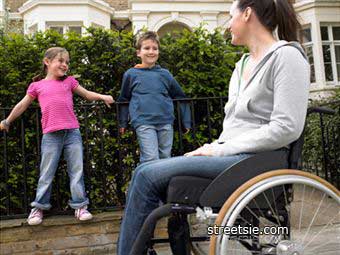
It is important to note that while we say most, like any demographic, not all wheelchair mothers and fathers are good parents. A disability like spinal cord injury is never an excuse for bad parenting. You may be inclined to make allowances, or conversely be overly critical of, parents with a disability. We suggest you treat wheelchair parents just like any other parent. Ask yourself if you would step in if there was no disability. When it comes to reporting neglect and abuse, a child’s safety and welfare must always be put before any other factor.
Enza Ronaldi, a wheelchair mother with muscular dystrophy admits when in public with her children,
“I am very aware of people looking at me, and very aware of how I’m acting with my children because I know I’m in the spotlight.” But, she concedes with a laugh, “Maybe they’re just thinking, ‘Oh, what cute kids!’” – Enza Ronaldi
Desirable Wheelchair Parenting Qualities
Cornell University’s Stephen Emlen and colleagues asked nearly 1,000 people aged 18 to 24 to rank several attributes, including physical attractiveness, health, social status, ambition, and faithfulness, on a desirability scale. People who rated themselves favorably as long-term partners were more particular about the attributes of potential mates. After fidelity, the most important attributes were physical appearance, family commitment, and wealth and status.
“Good parenting, devotion, and sexual fidelity – that’s what people say they’re looking for in a long-term relationship.” – Stephen Emlen
While worthy of consideration we need to use this information in context. These are what people say they’re looking for. These are not necessarily what it takes to be an excellent partner and parent. The data only spans a six year age difference. No statistics on the study group’s backgrounds were given and nowhere was a disability mentioned. With a focus on spinal cord injury and wheelchair parenting our list is quite different.
Couples considering parenting where one or both parents are wheelchair users I offer one crucial piece of advice. The measure of a man is not his height, it is how high he holds you. Not one of the skills required to be a good parent is of a physical nature. Compassion patience love and support, fidelity honesty and loyalty, are required and so top our list of admirable parenting qualities.
The human compulsion to seek an attractive tall athletic man or beautiful curvaceous healthy woman with good teeth dates back to caveman days. Partner selection based on genetic aesthetics ensured best family survival and longevity. Athletic men made good hunters, healthy attractive women bred healthy attractive children and the cycle repeated continuing bloodlines. There were no wheelchairs. Those with a disability born or incurred rarely lived more than a few years. A spinal cord injury meant imminent death.
We don’t live in caves anymore, we have dental plans, yet still many chose partners based on aesthetics. Without the qualities essential to parenting in the modern era such relationships often fail. Equally a spinal cord injury does not gift you good parenting capabilities. It’s important not to dismiss the ability to learn grow into and develop good parenting qualities.
For these reasons compassion patience and love top our desirable wheelchair parents list. An individual with spinal cord injury who is kind to animals, respectful and kind to family. Loving understanding and compassionate toward you, make good lifelong partners and parents. They typically afford the same ideals toward children be they biological or inherited children.
Cost To Parents With Spinal Cord Injury
Certainly wealth and status are sought by the majority of parents wanting to provide their children the tools and opportunities to good education, health services, safety and social development. You only need consider a mobile (cell) phone. Used responsibly it can enhance all the above in a child’s life. These are not cheap devices especially if your child changes phones as frequently as those I know.
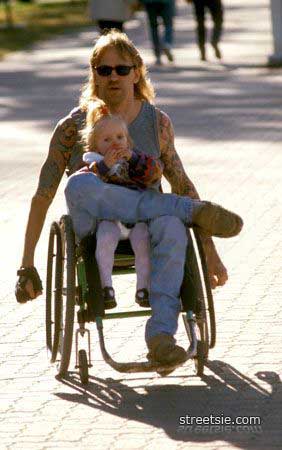
Living with a spinal cord injury is expensive costing around $167,000 AUD annualy to meet the basic needs of a paraplegic. The higher the level of injury the higher the cost of living post injury. Quadriplegia (tetraplegia) pushes this figure out to $392,000 AUD for essential basic services and equipment. The expense of high level quadriplegia requiring mechanical ventilaton is $1,047,000 AUD per year. This is in a country that provides (for those who qualify) free basic health care, education and subsidised housing.
Add the annual cost of $11,000/boy and $14,000/girl and clearly evident parents with a disability face huge financial expenses beyond the average citizen. Mobile phones and other “luxury items” come secondary to the cost of spinal cord injury.
- Length of initial hospitalization following personal injury in acute care units: 15 days
- Average stay in rehabilitation unit: 44 days
- Initial hospitalization costs following injury: $140,000 USD
- Average first year expenses for a SCI injury (all groups): $198,000 USD
- First year expenses for paraplegics: $152,000 USD
- First year expenses for quadriplegics: $417,000 USD
- Average lifetime costs for paraplegics, age of injury 25: $428,000 USD
- Average lifetime costs for quadriplegics, age of injury 25: $1.35 million USD
- Percentage of SCI individuals who are covered by private health insurance at time of injury 52%
- Percentage of SCI individuals unemployed eight years after injury 63%.
New Zealand has taken lead in recent years recognizing that the actual cost of living with a spinal cord injury is the real disability. Australia Canada Switzerland Germany and other countries are adopting the NZ model through social and medical reform. The lives of wheelchair users have proven to be greatly enhanced by early financial assistance. From basic human rights to productive contributors in society early socio-economic support is key.
Restoring Broken Spines And Homes
Some who accidently receive a spinal cord injury already have a partner or spouse children and extended family members. This can compound a pressure to resume their previous lifestyle and parental role. While desirable and possibly noble that approach is not practical. A spinal cord injury is for the majority a permanent disability. Wheelchair parents constantly report feelings of “sitting on the sidelines” being “unable to wrestle on the floor” and interact in sports and many other activities. It can become overwhelming. Some of these same wheelchair parents say the trick is to find new activities they can involve their children and participate in.
Modern materials and adaptive technologies are greatly enhancing the opportunities and experience of parenting with a disability. A wide range of adaptive products are available as necessity continues to drive innovation and better design. Handicap friendly equipment is often more user friendly for all. From cloth nappies that come with Velcro, to wheelchair driver accessible vehicles. Amazingly functional wheelchairs and high-tech adaptive sporting equipment also enrich the lives of handicapped parents.
The Right To Parent With A Disability
Not everyone believes that people with disabilities should have the opportunity to be parents. In the 1970s the practice of reproductive sterilization amongst individuals with intellectual impairments was common and is still practiced. I know a schizophrenic who married a bipolar schizophrenic whom together had a baby girl with various non-visible developmental and physical handicaps. To see this family in the street they looked like any other. Were they good parents? A judge thought not, they lost custody of their child, and eventually divorced.
A spinal cord injury is not contagious nor genetically contractible. To assume that a wheelchair makes anyone less capable or unworthy of parenting is simply a foolhardy misconception. Greater medicinal knowledge, social understanding and awareness establishes’ the opportunity to parent as a basic human right.
It could be argued that spinal cord injury wheelchair parents are more responsible than most. How many able-bodied potential parents have their sperm and/or eggs tested for genetic integrity, motility and viability, prior to conception? How many financially plan and qualify for various schemes, professional advice, and support? Most wheelchair parents do. The common argument is, you need to pass a test and hold a license to drive a car. But anyone can have a baby, no test or license required. We see truly horrific abusive parents in news and other media reports, very seldom are they wheelchair users.
Resources
- http://www.todaysparent.com
- http://momsonwheels.typepad.com
- The University of Alabama National Spinal Cord Injury Statistical Center – March 2002.
Hi There
I have just finished reading to my son a Amazon Kindle book called ‘Four Wheeled Hero’ based around a young boy named Tommy who is wheelchair bound and his best mate Smithy. Every night I would read him one chapter before he went to bed, and he could hardly wait for bedtime to come to hear the next. The book is very funny as well as having a story line that keeps you glued to the book from start to finish. The reason why I have sent this note to you is the fact that I have never seen a book published where a child in a wheelchair is the hero of the day and as such would give that feel good feeling to any child in that situation who reads it, as it did my son. As a mother it was wonderful to see his face as we worked our way through the chapters, watching the enjoyment and excitement he showed as the two boys followed their quest. I have added a couple prints from the book that can explain it better than me. An excellent book for all children young and old. There are only a few books with disabled children in them as I suppose they are not seen as interesting, but this book changes all of that.
This is an Amazon Kindle Book and if anyone cannot afford to buy the Kindle Tablet then go onto the Amazon Kindle Book web page where you will find a free kindle app available to download onto PC’s mobile phones etc. This app gives you all of the Kindle Tablet program to allow you the get your copy of Four Wheeled Hero as well as thousands of other titles, some free of charge.
Best Regards
Brenda Green
This exciting adventure story for children will have all lovers of traditional fantasy ‘boy hero’ tales on the edge of their seats until the final word.
The story has two young teenage heroes, Tommy and Smithy. But this is a children’s fantasy adventure story with a difference because one of the heroes, Tommy, is confined to a wheelchair following a terrible accident.
The story begins when Tommy is sent a magical stone from his Uncle Bill who is on an expedition in the Brazilian Rain Forest. Bill was given the stone by a village chieftain after he saved his son’s life. He was told that the stone had magical powers so he sent it to Tommy for his stone collection.
But it turned out to be much more ‘valuable’ than for inclusion in the stone collection for, a couple of days later, Tommy’s father, who is the manager of the local bank, is kidnapped by robbers when they realise that the alarm system has been set and they have to wait until Monday when it would allow the vault to be opened.
When Tommy and Smithy decide to try to track the robbers down the real power of the magic stone is revealed. This power is that when Tommy thinks of something the stone makes it happen so the robbers are in for some real surprises as Tommy’s wheelchair develops some very unusual and effective weapons and powers. So, with the help of Smithy’s cat, Tiger, who more than lives up to his name, the robbers are taught a lesson they certainly don’t expect.
This is an exuberant and exciting children’s adventure that will appeal to young and old alike.